Wednesday, July 29, 2009

Contributors: Mattie Rae


It wasn't until my adult years that I began loving books. Once my love developed, I haven't stopped reading since. There are so many good books out there to read and to learn from that I think it will take the rest of my life to even put a dent in reading all the books I want to.

I am single and have lived an adventurous life. I have traveled and been educated which has only opened my eyes to the great lessons people have to teach each other. Reading is a fantastic way to learn from others and so the books I value the most are the ones that teach me something I can use in my life whether it be by fiction or non-fiction.

I believe in old fashion values and that they are applicable today. I enjoy reading books that are free from language and other mature content. There are just too many books out there and so little time. I have chosen to give my time to books that are uplifting, informative, and clean. I hope my comments and reviews will be helpful to you in choosing good books to read!

Tuesday, July 21, 2009

About our Contributors: Rindee

I am a mother of 4 young children ages 1-9. I really enjoyed reading in Jr. High, but after that I filled my time with volleyball, choir, orchestra, and working. Mostly what I read in high school was required reading for my English classes. As I entered college, marriage and motherhood, works of non-fiction seemed to dominate my repertoire as I tried to get a handle on life and tried to figure out all I didn't know. I told myself that there wasn't enough time in this life to waste some of it on silly stories that weren't even real.

When I was pregnant with my first child I did a lot of reading to learn how to be a great mother. A common theme that seemed to repeat itself was the importance of reading to your children. My husband and I created a "literature budget" and vowed to buy one children's book each month to gradually build our library and fill it with books we enjoyed as children. I also made a promise to myself that if my child ever asked me to read them a book that I would stop whatever I was doing and hold them as I read their story of choice. My children love to read and have been early readers.
Four years ago I was put in charge our our Relief Society's Book Club and had to attend to monitor the subject matter. In that book club I read books of other genres that I would never chosen myself and was pleasantly surprised that I enjoyed every one of them. I now try to balance non-fiction along with fiction and have found that I can even learn things from those "silly stories." I also discovered that I love to read! I'm always reading or learning about something. Although I never would consider myself an avid reader, my husband told me once that "You read more than most."
I am picky about quality and content for me and my children. If I'm not enjoying a book, I have nothing against not finishing it. There is too much good literature out there to waste my time on garbage. I am also sensitive about the content in books. I don't enjoy excessive language, descriptive violence, detailed intimacy, or infidelity in my books. I feel that if these elements need to be included in a story that they can be included in a tactful way. I like to surround myself with inspirational stories, wisdom, and hope.

Along with non-fiction, my favorite genera is Speculative Fiction. I enjoy reading about hypothetical situations that are realistic. Some of my favorite examples of these books are the "Great & Terrible" series by Chris Stewart and "Life as We Knew it" by Susan Beth Pfeffer. I also enjoy Fantasy books such as "The Lord of the Rings" by JRR Tolkein, "Fablehaven" by Brandon Mull, and the "Twilight" series by Stephenie Meyer.

Monday, July 20, 2009

Ender's Game by Orson Scott Card

As I was looking through some lists on Goodreads.com for books for my 9- year-old son to read, this book seemed to be at the top of many of the lists of favorites. Although this book can be found in the Young-Adult section of my library, I found it on a list for 10 year-olds to read. I thought I'd better find out why it was in the YA section before letting my 9 year-old get his hands on it. I'm glad I did.

Taken from Wikipedia, here is the general summary of the book:

"Set in Earth's future, the novel presents an imperiled humankind who have barely survived two conflicts with the Formics (an insectoid alien race also known as the "Buggers"). In preparation for an anticipated third invasion, an international fleet maintains a school to find and train future fleet commanders. The world's most talented children, including the novel's protagonist Ender Wiggin, are taken at a very young age to a training center known as the Battle School. There, teachers train them in the arts of war through increasingly difficult games including ones undertaken in zero gravity in the Battle Room where Ender's tactical genius is revealed. "

This book is very well written with wonderful character development, and a sense of mystery throughout the book. I can see why it is a favorite of many. Although I enjoyed the plot the main character, and the storyline, I found myself having a hard time getting through this book. It has a general dark feeling to the book. There isn't a lot of happiness or hope in the story. There is also a lot of cruelty in the story, which I didn't enjoy reading about. I was also surprised at the amount of language used in this story. More language in this book than in any I've read for a long time. Not what I expected from an LDS author.

I don't think I'll be reading any more of Orson Scott Card's books. It took me a long time to get through this one and I didn't feel like I came away with anything of benefit. I would definitely not recommend this book for anyone under the age of 16. It had a lot of manipulative personalities and strategies that would be hard for a younger child to really grasp. It also had so much language and cruelty, I don't think it would be appropriate for younger children, either.

Sorry Mr. Card. I'm not a fan.

Wednesday, July 15, 2009

What to read for August?

Here are the choices for August. Be sure to vote for as many as sound interesting. Books with votes will return to the polls next month along with new suggestions. Please add your book suggestions in the comments section to be considered for the following month.


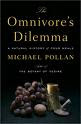
The Omnivore's Dilemma by Michael Pollan


"What should we have for dinner?" To answer this question, he follows four meals, each derived through a different food-production system, from their origins to the plate. Along the way, Pollan examines the ethical, political, and ecological factors that are intertwined in the industrial, large-scale organic, local, and personal (hunted-gathered) food chains, while describing the environmental and health consequences that result from food choices within these chains.


1984 by George Orwell


A classic dystopian novel published in 1949, focuses on a repressive, totalitarian regime. The story follows the life of one seemingly insignificant man, Winston Smith, a civil servant assigned the task of perpetuating the regime's propaganda by falsifying records and political literature. Smith grows disillusioned with his meager existence and so begins a rebellion against the system that leads to his arrest and torture.


Airman by Eoin Colfer


Conor Broekhart discovers a conspiracy to overthrow the king. He is branded a traitor, imprisoned, and force4d to mine diamonds under brutal conditions. He plans a daring escape.


Someone Named Eva, by Joann Wolf

Kidnapped from her village, Milada struggles to remember who she really is as she grows up in a Nazi reeducation school. This book is based on a true story.


Waiting for Normal by Leslie Connor

When twelve-year-old Addie and her mother go to live in a small trailer by the railroad tracks on the outskirts of Schenectady, New York, Addie tries to cope with her mother's erratic behavior.


Night of the Howling Dogs, by Graham Salisbury

A Boy Scout campout in Hawaii turns into a struggle for survival that tests courage and friendship. This story is inspired by real events following a devastating tsunami.


Schooled by Gordon Korman

Homeschooled by his hippie grandmother, Capricorn (Cap) Anderson has never watched television, tasted a pizza, or even heard of a wedgie. But when his grandmother lands in the hospital, Cap lands in public school.


The Candy Shop War by Brandon Mull

Fifth-graders Nate, Summer, Trevor, and Pigeon meet the owner of the new candy store in town and are given a magical candy that endows them with super powers. They find that along with benefits are also dangerous consequences.

Monday, July 6, 2009

the Book of 1000 days

I LOVED the book!!!!!!!! It had a lot of dramatic parts which made the book interesting like......
when Lady V ( it was a weird name) tried to cut off Dashti's foot,
When she was going to be hung, sitting in the dungeon
When suddenly Lady Saren wanted the cat and tried to pull it off of Dashti's lap in the Kitchen and so on. This is the type of book i would love to read again!!!!

Tuesday, June 30, 2009

July's Read: Alas, Babylon

Alas, Babylon is a 1959 novel by American writer Pat Frank (the pen name of Harry Hart Frank). It was one of the first post-apocalyptic novels of the nuclear age and remains popular fifty years after it was first published. The novel deals with the effects of a nuclear war on the small town of Fort Repose, Florida, which is based upon the actual city of Mount Dora.

The novel's title is derived from Revelation 18:10, which is interpreted and quoted in the book as describing the aftermath of a nuclear attack. In the King James Bible, this passage reads:

Standing afar off for the fear of her torment, saying, Alas, alas that great city Babylon, that mighty city! For in one hour is thy judgment come.


Here are a few questions for study and discussion.

How does Pat Frank reveal character in Alas, Babylon?
What are some symbols in Alas, Babylon? How do they relate to the plot and characters?
What is the central/primary purpose of the story? Is the purpose important or meaningful?
How does the past figure into the novel?
What is the role of women in this novel?
How do politics figure into the novel?


Be sure to vote in the poll to help choose the next read! You can vote for as many as sound interesting! A vote will keep that book in the running.


Sunday, June 21, 2009

What to read next poll

To help you decide what books you may be interested in reading, I will post some details about the books in the poll. Please check boxes for all you are interested in reading. Except the first two, these books are nominees to win the Beehive Award for 2009 or 2010 given by the Children's Literature Association of Utah. If you have any other suggestions, please put them in the comments section and we will consider those as well.


Prophecy: Key to the future, by Duane Crowther
Explores LDS prophecy regarding the future of America and the events leading up to the second coming of Jesus Christ.


Alas, Babylon by Pat Frank

a 1959 novel that was one of the first post-apocalyptic novels of the nuclear age and remains popular fifty years after it was first published. The novel deals with the effects of a nuclear war on the small town of Fort Repose, Florida, which is based upon the actual city of Mount Dora.


Someone Named Eva, by Joann Wolf

Kidnapped from her village, Milada struggles to remember who she really is as she grows up in a Nazi reeducation school. This book is based on a true story.


Evolution, Me & Other Freaks of Nature, by Robin Brande

Mena is at odds with her conservative family and friends when she stands up for a teacher who refuses to include "Intelligent Design" in lessons on evolution.


Hunger Games by Suzanne Collins

In a future North America, sixteen-year-old Katniss's skills are put to the test when she voluntarily takes her younger sister's place in a televised survival competition.


Waiting for Normal by Leslie Connor

When twelve-year-old Addie and her mother go to live in a small trailer by the railroad tracks on the outskirts of Schenectady,k New York, Addie tries to cope with her mother's erratic behavior.


Night of the Howling Dogs, by Graham Salisbury

A Boy Scout campout in Hawaii turns into a struggle for survival that tests courage and friendship. This story is inspired by real events following a devastating tsunami.


Airman by Eoin Colfer

Conor Broekhart discovers a conspiracy to overthrow the king. He is branded a traitor, imprisoned, and force4d to mine diamonds under brutal conditions. He plans a daring escape.


Schooled by Gordon Korman

Homeschooled by his hippie grandmother, Capricorn (Cap) Anderson has never watched television, tasted a pizza, or even heard of a wedgie. But when his grandmother lands in the hospital, Cap lands in public school.


Unwind
by Neal Shusterman

In a future world where those between the ages of thirteen and eighteen can have their lives "unwound" and their body parts harvested, three teens go to the extreme lengths to uphold their beliefs --and, perhaps, save their own lives.


The Candy Shop War by Brandon Mull

Fifth-graders Nate, Summer, Trevor, and Pigeon meet the owner of the new candy store in town and are given a magical candy that endows them with super powers. They find that along with benefits are also dangerous consequences.


Wildwood Dancing by Juliet Marillier

Five sisters who live with their merchant father in Transylvania use a hidden portal in the home to cross over into a magical wold, the Wildwood.